








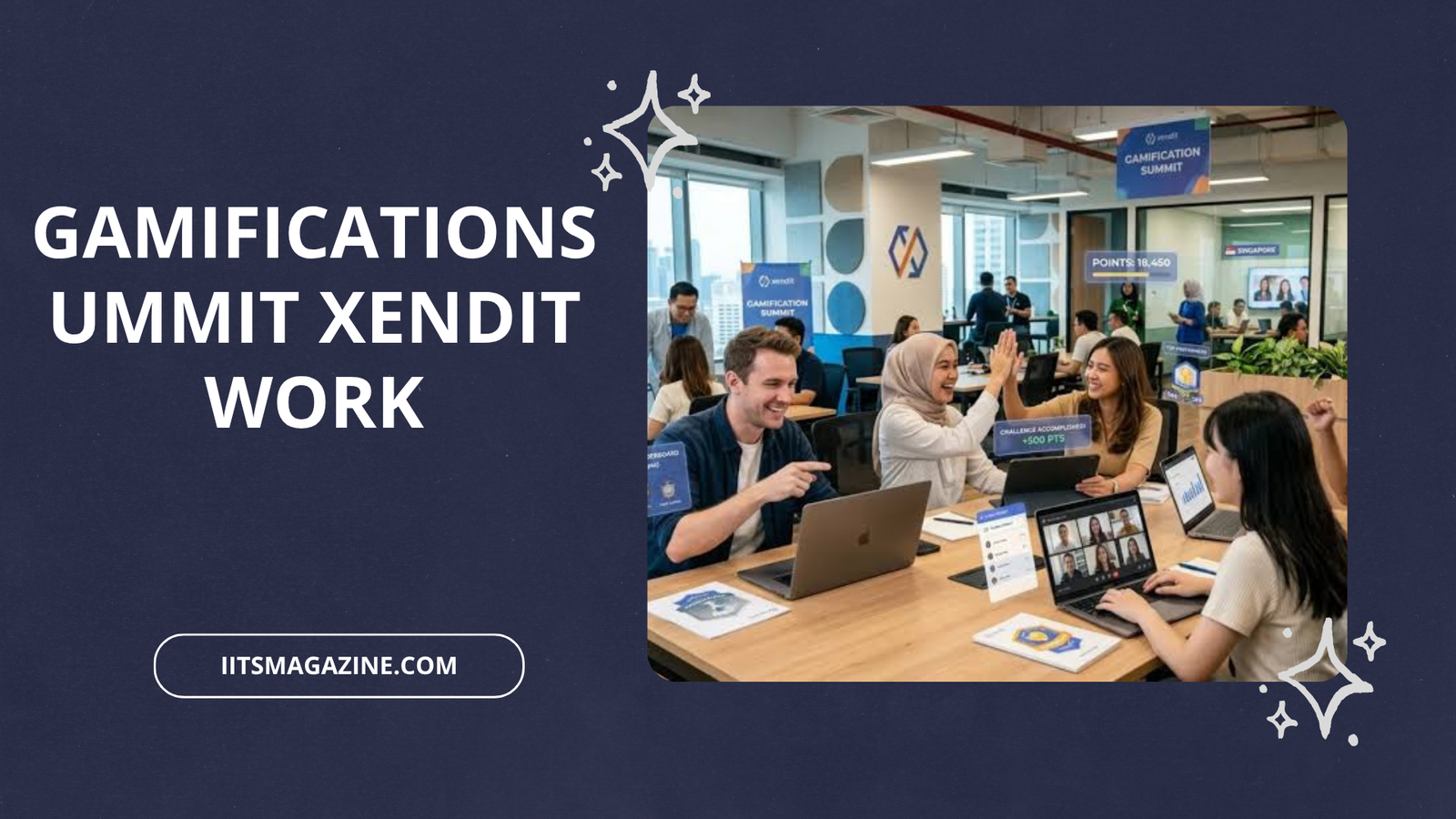
GamificationSummit Xendit Work has become a topic of interest among professionals who follow digital payments, fintech innovation, employee engagement, and business transformation. Many people are searching for this term to understand how gamification concepts connect with Xendit’s workplace culture, payment technology, and modern business practices.
Instead of being just another buzzword, GamificationSummit Xendit Work represents discussions around combining gamification strategies with fintech operations to improve customer experiences, employee productivity, learning, and business growth. This guide explains everything you should know, from its background to its practical applications, benefits, challenges, and frequently asked questions.
Important Facts
| Topic | Details |
|---|---|
| Primary Keyword | GamificationSummit Xendit Work |
| Industry | Fintech and Digital Payments |
| Main Focus | Gamification in workplace and payment technology |
| Target Audience | Business leaders, developers, HR professionals, marketers, fintech enthusiasts |
| Key Concepts | Employee engagement, customer rewards, digital innovation, learning, productivity |
| Common Applications | Training, customer loyalty, performance tracking, team collaboration |
| Benefits | Better engagement, higher motivation, improved customer experience |
| Challenges | Poor implementation, over-reliance on rewards, measurement difficulties |
| Best For | Organizations adopting modern digital transformation strategies |
What Is GamificationSummit Xendit Work?
GamificationSummit Xendit Work generally refers to discussions, ideas, and professional conversations surrounding gamification practices within fintech environments, particularly in relation to Xendit’s approach to innovation, employee engagement, and digital payment solutions.
Gamification itself means applying game-like elements—such as achievements, rewards, leaderboards, challenges, or progress tracking—to non-game environments. Within business settings, these techniques encourage participation, improve motivation, and make everyday tasks more engaging.
When people search for GamificationSummit Xendit Work, they are often looking for insights into how gamification can influence fintech organizations, workplace culture, customer interactions, and payment experiences.

Background of Gamification in Fintech
The fintech industry has changed dramatically over the past decade. Digital payment companies compete not only through technology but also through user experience and employee innovation.
Gamification emerged as an effective strategy because people naturally respond to goals, rewards, progress indicators, and healthy competition. Many organizations now integrate these elements into employee training, customer onboarding, loyalty programs, and internal productivity systems.
Industry events and professional summits frequently discuss these trends, helping organizations learn from real-world experiences and emerging best practices.
Why Gamification Matters in Modern Workplaces
Modern workplaces are no longer limited to traditional management methods. Employees expect engaging learning experiences, meaningful recognition, and opportunities for continuous growth.
Gamification supports these expectations by creating environments where progress becomes visible and achievements are celebrated. Rather than completing repetitive tasks without feedback, employees receive measurable milestones that encourage continuous improvement.
This approach is especially valuable in technology companies where learning never stops and innovation depends on motivated teams.
Core Features of GamificationSummit Xendit Work
Several characteristics are commonly associated with discussions around GamificationSummit Xendit Work.
- Achievement systems that reward progress instead of only final results.
- Interactive learning experiences that make employee development more enjoyable.
- Data-driven performance tracking to monitor engagement and productivity.
- Customer loyalty concepts designed to increase long-term retention.
- Team collaboration through shared goals and friendly competition.
- Recognition systems that encourage positive workplace behavior.
Each feature contributes to creating a more engaging environment for both employees and customers.
How Gamification Works in a Fintech Environment
Gamification begins by identifying desired behaviors. Organizations define goals, measure progress, and reward achievements without making work feel artificial.
For example, new employees may earn badges after completing onboarding modules. Customer service teams may receive recognition for maintaining high satisfaction scores. Developers might complete coding challenges that encourage learning new technologies.
These systems create motivation through visible progress rather than relying solely on financial incentives.
Common Uses of GamificationSummit Xendit Work
Gamification has practical applications across multiple departments within fintech organizations.
- Employee onboarding and training
- Customer loyalty and reward programs
- Sales performance tracking
- Developer learning initiatives
- Cybersecurity awareness training
- Internal knowledge-sharing programs
- Team-building activities
Because every department has measurable goals, gamification can be adapted to support different business objectives.
Benefits of GamificationSummit Xendit Work
Organizations adopting gamification strategies often experience improvements in several areas.
Employees typically become more engaged because they can clearly see their progress. Training programs become easier to complete when learning includes interactive milestones. Managers gain better visibility into performance without relying entirely on traditional evaluations.
Customers also benefit. Reward systems, loyalty points, personalized achievements, and interactive payment experiences help build stronger relationships with digital platforms.
Overall, gamification creates a more positive experience while encouraging consistent participation.
Possible Challenges and Limitations
Despite its advantages, gamification is not automatically successful. Poorly designed systems can lose effectiveness if rewards become repetitive or unrelated to meaningful goals.
Another challenge involves balancing competition with collaboration. Healthy competition motivates many employees, but excessive focus on rankings may discourage others.
Organizations also need reliable performance metrics. Without meaningful measurements, gamification risks becoming entertainment instead of supporting real business outcomes.
Step-by-Step Approach to Implementing Gamification
Businesses interested in gamification often follow a structured process.
- Define clear business objectives.
- Identify behaviors that support those objectives.
- Design meaningful rewards and recognition systems.
- Introduce measurable milestones.
- Monitor engagement using performance data.
- Gather employee feedback regularly.
- Improve the program based on measurable outcomes.
Following these steps increases the likelihood of sustainable engagement rather than short-term excitement.
Best Practices
Successful gamification depends more on thoughtful design than on flashy rewards.
The most effective systems focus on meaningful achievements rather than excessive competition. They encourage learning, collaboration, and long-term improvement instead of rewarding only short-term performance.
Organizations should also keep the experience simple. Complicated scoring systems often reduce participation because employees struggle to understand how success is measured.
Regular updates help maintain interest, ensuring that challenges evolve alongside business goals.
Common Mistakes to Avoid
Many organizations make avoidable mistakes when introducing gamification.
- Rewarding quantity instead of quality.
- Creating overly competitive environments.
- Ignoring employee feedback.
- Using the same rewards repeatedly.
- Measuring only activity instead of actual results.
Avoiding these issues allows gamification to support meaningful business improvements instead of becoming a temporary trend.
Real-World Examples
Imagine a customer support team where employees earn recognition after consistently maintaining excellent customer satisfaction ratings. Rather than rewarding the highest ticket volume, the organization values quality interactions.
Similarly, a developer training program may include progressive coding challenges. Participants unlock advanced learning modules only after mastering earlier concepts, making professional development more engaging.
Marketing teams can also use gamified dashboards to encourage campaign optimization while celebrating collaborative achievements instead of individual competition.
GamificationSummit Xendit Work Compared with Traditional Workplace Management
Traditional management often depends on annual performance reviews and delayed recognition. Employees may wait months before receiving meaningful feedback.
Gamification introduces continuous recognition, measurable progress, and regular motivation. Instead of one major evaluation, employees experience ongoing feedback that encourages consistent improvement.
This difference makes gamification especially attractive for fast-moving technology companies where learning and adaptation happen continuously.
Who Can Benefit?
GamificationSummit Xendit Work concepts are useful for a wide range of professionals.
Business leaders can improve employee engagement and organizational performance. HR teams can create more interactive onboarding experiences. Developers gain structured learning opportunities, while marketers can strengthen customer loyalty programs through rewarding user experiences.
Even small businesses can adopt simple gamification techniques without requiring expensive technology.
Future Trends
As artificial intelligence, automation, and advanced analytics continue evolving, gamification is likely to become increasingly personalized.
Instead of offering identical rewards to everyone, future systems may adapt challenges based on individual skills, learning pace, and career goals. Personalized recognition could make employee engagement even more effective while improving long-term retention.
Fintech companies are expected to continue experimenting with innovative approaches that combine technology, data, and behavioral psychology.
Frequently Asked Questions
1. What is GamificationSummit Xendit Work?
It generally refers to discussions and concepts involving gamification strategies within fintech workplaces, particularly relating to innovation, employee engagement, and digital payment ecosystems.
2. Why is GamificationSummit Xendit Work becoming popular?
Interest is growing because businesses increasingly use gamification to improve employee motivation, customer engagement, and organizational performance.
3. Is GamificationSummit Xendit Work only relevant to fintech companies?
No. While fintech is a major focus, the principles apply to education, healthcare, retail, technology, logistics, and many other industries.
4. How does gamification improve employee engagement?
It provides visible progress, recognition, meaningful challenges, and continuous feedback that encourage participation and professional growth.
5. Can small businesses use gamification?
Yes. Even simple recognition programs, progress tracking, and learning challenges can improve workplace engagement without significant investment.
6. What are the biggest challenges?
Poor design, weak performance metrics, repetitive rewards, and excessive competition are among the most common challenges.
7. Does gamification replace traditional management?
No. It complements existing management practices by making learning, recognition, and performance tracking more engaging.
8. Is GamificationSummit Xendit Work connected to digital payments?
Yes. The topic often appears in discussions about fintech innovation, digital payment platforms, workplace productivity, and customer experience.
9. What skills are useful for understanding gamification?
Knowledge of user experience, behavioral psychology, performance analytics, business strategy, and digital technology is helpful.
10. What is the future of GamificationSummit Xendit Work?
The future points toward AI-powered personalization, smarter analytics, adaptive learning systems, and more engaging employee and customer experiences.
Final Verdict
GamificationSummit Xendit Work reflects a growing interest in combining gamification principles with fintech innovation and workplace excellence. Rather than treating work as a series of repetitive tasks, organizations increasingly use achievements, progress tracking, recognition, and meaningful challenges to create engaging experiences for employees and customers alike.
As digital transformation continues across industries, gamification is expected to remain an important strategy for improving learning, productivity, collaboration, and customer satisfaction. Businesses that implement these ideas thoughtfully are more likely to build motivated teams, stronger customer relationships, and sustainable long-term growth.
You miss that : PlayMyWorld Latest Gaming Complete Guide to Features, Games, Updates, and Everything You Need to Know